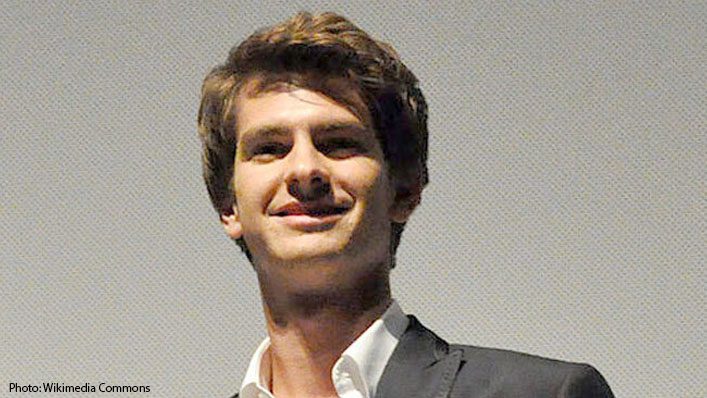
Andrew Garfield: Unpacking the Spiritual Tapestry of a Hollywood Seeker
Andrew Garfield, an actor celebrated for his profound depth and authenticity on screen, has captivated audiences not only with his performances but also with his thoughtful explorations of life's bigger questions. While often associated with his iconic roles, his personal spiritual journey offers an equally compelling narrative, painting a picture of a man shaped by diverse influences yet committed to forging his own path. Far from adhering to a single dogma, Garfield's perspective on faith, doubt, and purpose is a fascinating study in modern spirituality, deeply informed by his family background and an innate curiosity. Delving into
Andrew Garfield's religion or, more accurately, his personal philosophy, reveals a refreshing honesty about the complexities of belief in the modern age.
The Roots of Belief: From Garfinkel to a Multifaceted Upbringing
The story of Andrew Garfield's spiritual foundations begins with his heritage. His paternal grandparents, carrying the surname Garfinkel, emigrated from Eastern Europe to London, establishing a strong Jewish lineage. However, as Andrew himself has clarified, he "wasn’t actually raised Jewish." This distinction is crucial to understanding his unique journey. His father, though Jewish by birthright, made a conscious decision to leave the faith as a young boy, later identifying as an atheist. Interestingly, Garfield notes that his father is now "coming around to some kind of higher power," illustrating a fluid and evolving spiritual path within the family itself.
His mother, on the other hand, identifies as a pantheist – someone who believes that the divine is immanent in all things and that the universe itself is a manifestation of God. This blend of an atheist father with evolving views and a pantheist mother created an environment rich in diverse perspectives, free from rigid religious instruction, which undoubtedly fostered Andrew's natural inclination towards questioning and seeking. This early exposure to differing worldviews, rather than a singular doctrine, laid the groundwork for his lifelong identity as a spiritual seeker. For many, navigating the spiritual landscape shaped by parental beliefs, or lack thereof, becomes a foundational step in defining their own personal truth. Andrew Garfield's experience offers a compelling example of how such a backdrop can lead to a deeply personal and non-conformist spiritual exploration. To understand more about the origins of his spiritual inquiry, you might find insight in
Andrew Garfield's Spiritual Path: Jewish Roots and Seeking Truth.
Embracing Doubt: The Philosophy of a Perennial Seeker
One of the most defining characteristics of Andrew Garfield's spiritual outlook is his profound appreciation for doubt. He has openly stated, “Certainty is the most terrifying thing to me. … It is so healthy to doubt. Certainty starts war. Certainty starts war on behalf of ideology: ‘I know and you don’t.’ That’s the scariest thing to me, what a human being is capable of doing.” This statement is not merely a passing thought but a central tenet of his philosophy, shaping his approach to life, spirituality, and even his craft.
For Garfield, doubt is not a weakness but a vital intellectual and spiritual tool. It fosters humility, encourages continuous learning, and prevents the dogmatism that can lead to conflict and intolerance. In an age where many seek definitive answers and absolute truths, Garfield champions the space of unknowing, finding liberation and growth within it. This perspective challenges conventional notions of faith, suggesting that true spiritual strength might lie in the courage to question, rather than the comfort of absolute answers. His aversion to certainty can be seen as a form of spiritual humanism, prioritizing compassion and understanding over rigid ideological adherence. This mindset allows him to engage with different spiritual traditions, as he has done through his roles (such as a Jesuit priest in *Silence*), not as a convert but as an empathetic explorer.
Practical Insight: Cultivating Healthy Doubt
*
Question Assumptions: Regularly challenge your own beliefs and those presented as absolute truths.
*
Seek Diverse Perspectives: Engage with ideas that differ from your own to broaden understanding.
*
Embrace Curiosity: Maintain an open mind and a willingness to learn, even if it means altering previously held convictions.
*
Practice Intellectual Humility: Acknowledge the limits of your own knowledge and understanding.
A Newfound Spiritual Urgency: Aligning Soul with Vocation
In recent times, Andrew Garfield has spoken about a profound "spiritual urgency" that has begun to guide his professional choices. This is a significant evolution for an actor whose career has been marked by diverse and often challenging roles. This urgency means he now only wants "to do the things that speak to my soul that I feel like I am the vessel for to get into the world.” This sentiment speaks to a deeper quest for authenticity and purpose, where his work becomes an extension of his personal spiritual mission.
This isn't merely about picking roles he enjoys; it's about discerning projects that resonate with his deepest values and feel like a calling. It implies a sense of stewardship, where his talent and platform are used to convey messages or experiences that he believes are vital for the world. For many, integrating personal spirituality with professional life is a lifelong pursuit. Garfield's articulation of this "spiritual urgency" offers a powerful example of how one can strive to align their outer achievements with their inner convictions, transforming work from mere labor into a form of sacred service. It suggests a journey where career decisions are no longer solely driven by ambition or fame, but by a deeper, more resonant sense of spiritual fulfillment.
This shift underscores a broader trend where individuals, particularly those in the public eye, are increasingly seeking meaning beyond material success. It’s a call to introspection: what truly speaks to our soul, and how can we leverage our unique talents to bring that into the world? For a deeper dive into his motivations, consider reading
Unpacking Andrew Garfield's Beliefs: Doubt, Urgency, and Parents.
The Fluidity of Faith: Beyond Labels and Dogma
Andrew Garfield's journey, from his paternal Jewish roots and an atheist father to a pantheist mother and his own identity as a spiritual seeker, exemplifies a modern approach to spirituality that often transcends traditional religious labels. His disinterest in certainty and his embrace of doubt position him as a figure who champions personal exploration over dogmatic adherence. While he may not subscribe to a specific
Andrew Garfield religion in the conventional sense, his life is undeniably guided by a strong spiritual compass.
This compass points towards authenticity, meaningful engagement with the world, and an ongoing quest for understanding. He embodies the idea that spirituality is less about belonging to a particular institution and more about an internal process of growth, questioning, and connecting to something larger than oneself. His openness about his journey offers encouragement to others who might feel disconnected from traditional religious structures but still yearn for a spiritual dimension in their lives.
Tips for Your Own Spiritual Journey:
*
Define Your Terms: Consider what "spirituality" means to you, independent of external definitions.
*
Engage in Self-Reflection: Journaling, meditation, or spending time in nature can help you connect with your inner self.
*
Explore Diverse Philosophies: Read about different religions, spiritual practices, and philosophical viewpoints without pressure to adopt them.
*
Seek Meaning in Your Actions: Find ways to infuse purpose and values into your daily life and work.
*
Embrace Evolution: Recognize that your spiritual path is dynamic and may change over time, just as Andrew Garfield’s father’s views have.
Conclusion: A Spiritual Journey in Progress
Andrew Garfield's spiritual journey is a compelling testament to the power of personal inquiry and the beauty of an evolving worldview. From his family's diverse spiritual backdrop to his steadfast commitment to doubt and his newfound spiritual urgency in his career choices, he represents a modern seeker unafraid to explore the nuances of faith and meaning. His story reminds us that spirituality isn't always about definitive answers or rigid adherence, but often about the journey itself – a continuous process of questioning, learning, and aligning one's life with what truly resonates with the soul. In a world often polarized by certainty, Andrew Garfield's voice offers a refreshing and vital invitation to embrace the healthy space of unknowing, fostering understanding and personal growth above all else.